

Search is changing faster than most businesses realize. Over the past few years, Google and other platforms have shifted from traditional keyword-based ranking to systems powered by artificial intelligence, user behavior, and real-world authority. People are asking longer, more conversational questions, and search engines are responding with more direct answers, summaries, and AI-generated results.
This shift has created a very different competitive environment. Old SEO strategies that once worked reliably — publishing short articles, chasing keywords, or building links without a clear plan — no longer guarantee visibility. Today, search engines want to understand who is genuinely trustworthy, which websites show real expertise, and which businesses people engage with the most.
Across industries, this change is pushing companies to rethink how they appear online. Success now depends on demonstrating credibility, earning real signals of authority, and being present wherever search engines look for proof.
For law firms, these changes carry even more weight. Legal topics require accuracy, trust, and clarity — exactly the areas AI systems evaluate most closely. As the search landscape continues to evolve, understanding these shifts has become essential for any firm that wants to stay visible, reach clients, and outperform competitors in 2025 and beyond.
How SEO Has Changed in 2025
Search engine optimization in 2025 looks very different from what businesses were doing even two or three years ago. Instead of focusing mainly on keywords, website updates, and traditional backlinks, search engines now rely heavily on artificial intelligence to understand the intent behind searches and the authority of the websites that appear as results.
This shift means that ranking is no longer about who publishes the most content or who uses the right keywords. It is now about which businesses demonstrate real-world credibility, trust, and usefulness. Artificial intelligence systems are trained to evaluate these signals the same way a human might, and this has reshaped the entire landscape.
Search engines now use AI to understand intent
Modern search engines, especially Google, analyze much more than what someone types. They evaluate whether the content actually answers the question, whether the business is trustworthy, and whether users engage with the website. This creates a higher standard and makes shortcuts or outdated SEO tactics less effective.
User engagement and behavior now influence rankings
Search engines can now recognize when people leave a website quickly, spend time reading, or interact with multiple pages. These behaviors help AI determine whether a result is genuinely helpful. Businesses with thin, repeated, or generic content tend to fall behind, while those providing clear value gain visibility.
Authority has become more important than volume
Publishing large amounts of content no longer guarantees visibility. Instead, search engines prefer businesses and professionals who show consistent expertise in their field. Real brand signals, reputation, reviews, and credible online mentions matter far more than the number of blog posts.
The Rise of AI-Driven Search
Search is no longer just typing keywords into Google. People now turn to AI tools like ChatGPT, Google Gemini, and Microsoft Copilot because they provide direct, conversational answers. Instead of digging through dozens of links, users get immediate summaries, explanations, and recommendations.
What LLMs Actually Do When Someone Asks a Legal Question
Large language models (LLMs) scan huge parts of the internet, compare information from many sources, and then generate an answer they believe is accurate and trustworthy. They aren’t pulling results from a single website — they pull patterns, ideas, and authority from everywhere.

Google’s AI Overviews Are Changing the First Page Forever
Google now inserts AI-generated summaries at the top of many searches. These overviews often answer the question before the user ever sees a traditional organic result. This means fewer clicks, fewer website visits, and much more competition for visibility.
Why Traditional SEO Alone Isn’t Enough Anymore
If your content isn’t being recognized by AI systems, it won’t matter how well your site ranks in traditional search results, because fewer users will ever reach those results. The new challenge is ensuring your firm appears in the data and trusted sources that AI uses to form its answers.
What This Means for Law Firms and Local Businesses
Whether someone is looking for “DUI lawyer near me,” “how to fight a restraining order,” or “what happens after a car accident,” many are now getting an AI summary instead of scanning search results. Law firms must adapt to this new environment, because visibility inside AI answers is quickly becoming just as important as visibility in Google rankings.
The Rise of AI-Powered Backlinks
Search engines no longer look at backlinks the way they used to. Instead of simply counting how many links point to a site, today’s AI-driven systems examine whether those links genuinely help answer user questions, support real expertise, and provide context for Large Language Models. This shift has created a new category of SEO strategy: AI-powered backlinks.
How Backlink Quality Is Being Evaluated by AI Models
AI models look for patterns, meaning, and relationships—not just link placement.
They evaluate:
- Whether the linking page provides real information
- Whether the content is topically connected to the law firm’s practice areas
- Whether the link appears naturally and fits the context
- Whether it helps the model understand who the attorney is and what they specialize in
This is very different from old ranking systems that focused mainly on domain metrics.
Why Traditional Link Building No Longer Works the Same
Techniques that worked five years ago now lose impact because they don’t help AI systems understand your firm.
Links created only for volume or domain score do not influence:
- AI Overviews
- Chat-based results
- LLM summaries
- AI assistants recommending law firms
In short, old-style link building may still move rankings slightly, but it does not influence the new generation of search results where clients are now discovering attorneys.
What Makes a Backlink AI-Optimized
An AI-optimized backlink does more than point to a site.
It helps answer questions that people ask and provides information that an AI system can use when forming legal recommendations.
An effective AI-optimized backlink typically:
- Comes from content written in natural, helpful language
- Matches the intent of a legal search
- Gives context about the attorney or practice area
- Appears on pages where real users would benefit from the link
This is why volume alone is no longer enough. The content surrounding the link matters as much as the link itself.
The Role of AEO and GEO in Modern Backlinks
AEO (Answer Engine Optimization) and GEO (Generative Engine Optimization) focus on making sure AI systems can understand, reference, and confidently recommend a business.
In link terms, this means:
- Structuring content so AI can easily extract meaning
- Using natural phrasing that aligns with common legal queries
- Creating link pathways that reinforce authority on specific legal topics
For attorneys, this means building links that help AI models “see” your expertise.
Why Law Firms Benefit the Most From AI-Powered Link Strategies
Law firm searches rely on trust, clarity, and authority.
When someone asks an AI tool for legal help, it prefers sources that show consistent signals of expertise across the web—which often come from well-designed backlink networks.
AI-powered backlinks help law firms:
- Appear in AI recommendations
- Strengthen topic authority in practice areas
- Improve visibility in long, conversational legal queries
- Gain an advantage over firms relying on outdated SEO
In a market where every attorney wants to be seen first, these modern backlinks give firms an edge where search behavior is shifting.
What Law Firms Need to Compete in 2025
The legal industry has always been competitive, but the shift toward AI-driven search has raised the bar. Clients are no longer finding lawyers through one predictable path. They move between Google results, AI Overviews, legal directories, social platforms, and chat-based assistants—expecting fast, accurate answers at every step.
To stay visible in 2025, law firms need more than a website. They need a complete digital foundation that search engines, AI systems, and real people can trust.
Clear online visibility wherever clients search
Potential clients now rely on multiple touchpoints. A firm must appear consistently across search engines, AI tools, directories, and maps. This happens through strong optimization, strategic backlinks, and a footprint that reinforces credibility across platforms.
A website that creates instant trust
Before someone contacts a lawyer, they evaluate the firm within seconds. Modern design, fast loading speed, helpful content, and clear practice-area explanations all influence conversions. A polished online presence is no longer optional—it sets the tone for your reputation.
Backlinks that actually signal authority
Search engines and AI models depend on backlinks to understand which legal sources are credible. Not all links help. Low-quality citations, private blog networks, and mass-produced links no longer influence rankings. What matters today is consistent, diverse, high-authority linking from reputable sources—something that directly strengthens a firm’s authority across both traditional and AI-powered search.

A content strategy built on real client intent
People now search in conversational ways, often describing their situation instead of typing broad phrases. Law firms that create helpful, specific content—clear answers, real explanations, practical guidance—earn visibility and trust. This type of content is also preferred by AI systems when generating summaries or recommendations.
Decisions guided by real data
The most successful firms track what actually drives results: search terms that bring clients, pages that convert, backlinks that generate authority, and technical issues that block visibility. Data-driven adjustments ensure continuous growth rather than guesswork.
Why More Law Firms Are Turning to Dedicated SEO Partners
As search becomes more competitive and AI-driven, many law firms are realizing that SEO can no longer be handled casually or “whenever there’s time.” Rankings now depend on consistent content, trustworthy backlinks, and a clear technical foundation. That level of effort is difficult to maintain internally, which is why firms are increasingly relying on specialized SEO partners who can focus on the work full-time while attorneys focus on practicing law.
Working with a dedicated SEO team gives firms access to strategy, execution, and ongoing improvements that would be difficult to replicate in-house. It also ensures that the firm keeps up with Google’s algorithm updates, AI-generated search changes, and the evolving competitive legal landscape.
High-Quality Backlinks Built for Legal SEO
Law firms compete in one of the toughest SEO categories, and backlinks remain one of the strongest ranking signals across Google and most AI-powered engines. A dedicated SEO partner handles the outreach, placement, and content creation needed to secure quality backlinks month after month.
Check out our guest post backlinks service to find out how we can help you.
Monthly Backlink Plans for Consistent Growth
Instead of random one-off link building, consistent month-to-month backlink creation helps sites grow steadily, maintain trust, and stay competitive. This is especially important now that AI systems evaluate domain strength over time rather than just single pieces of content.
Check out what our monthly SEO backlinks plan looks like.
SEO Audits to Identify Hidden Issues
Many law firm websites look fine on the surface, but behind the scenes they may have indexing problems, thin pages, slow load times, or conflicting signals that hold them back. An SEO audit identifies these issues clearly and provides a roadmap for improvement.
Our SEO audit is aimed at assessing your exact requirements and tailoring the approach.
A Partner Focused on Results
Behind every successful law firm SEO campaign is a team that understands how competitive the legal market truly is. That is where our work comes in. Instead of offering generic marketing packages, we focus specifically on the strategies that have the strongest impact for law firms: backlinks, optimization, and technical clarity.
Our approach is simple. We build real authority through high-quality guest posts, provide steady growth through monthly backlink plans, and uncover hidden performance issues through detailed SEO audits. Every recommendation is backed by data, and each campaign is designed to produce measurable improvement rather than surface-level activity.
What Law Firms Can Expect When They Work With Us
Most attorneys come to us because their website isn’t getting the visibility it deserves. They’ve invested in redesigns, written articles, and tried different marketing vendors, but the organic growth simply isn’t there. The truth is that search has changed so dramatically that traditional SEO no longer produces the same results. What does make a measurable difference today is strategic backlink authority, consistent optimization, and clear reporting.

When a law firm begins working with us, the first noticeable shift is clarity. Instead of guessing why a site is stuck, we show exactly what is holding it back, where authority is missing, and what level of backlink strength competitors are using to win cases online. From there, the improvements begin to build month after month.
Below are the core outcomes law firms typically experience.
Faster Indexing and More Frequent Visibility in Search
When high-authority backlinks point to a law firm’s website, Google and AI systems begin crawling and indexing the site more aggressively. This leads to more pages being discovered, more keywords being tested in search, and earlier visibility for newly published content.
Steady Growth in Traffic, Rankings, and Inquiries
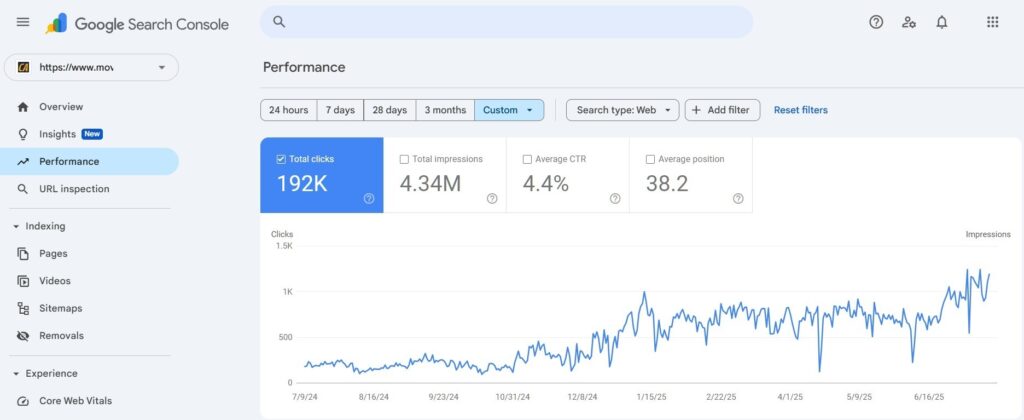
Once authority begins rising, Google Search Console typically shows an increase in impressions followed by a rise in clicks. For most firms, this translates into more calls, more form submissions, and more qualified case leads.
Check out what our clients say about working with us:
“Within three months, our firm went from barely appearing for our target keywords to ranking on page one for multiple practice areas. The backlink strategy made an immediate difference.”
“We’d tried agencies before, but none delivered results this consistent. The ongoing backlink plan steadily increased our traffic and brought in a measurable rise in new consultations.”
“Communication, transparency, and results. That’s been our experience. Our intake team has been noticeably busier since the campaign began.”
Competitive Strength in AI-Powered Search
In 2025, search engines and AI assistants often choose answers based on trust signals. Backlink authority remains one of the strongest of those signals. With a consistent flow of high-quality backlinks, law firms become more likely to appear in AI overviews, local legal queries, and LLM-generated responses.
A Clear Roadmap Instead of Guesswork
Every law firm receives a practical, step-by-step plan that includes:
• A backlink structure tailored to their legal niche
• A monthly link-building strategy
• Clear reporting
• An SEO audit when needed
• Internal recommendations to support ranking growth
This allows attorneys to see exactly what is happening and why it matters, with no technical complexity.
A Partner Focused on Measurable Growth
Law firms don’t need to understand SEO to benefit from it. They simply need a partner focused on delivering authority, visibility, and long-term compounding results. When those pieces are in place, everything else becomes easier—content ranks faster, local pages perform better, and organic traffic becomes a predictable source of new cases.
What Real SEO Growth Looks Like
Most attorneys don’t want promises — they want evidence. Search visibility, traffic growth, and lead flow can all be measured, and modern SEO provides clear data that shows what is working and why. Below is the type of performance law firms typically see when they invest consistently in high-quality backlinks, technical cleanup, and ongoing optimization.
Increasing search impressions and visibility
When a backlink strategy begins to take effect, one of the first indicators is a rise in impressions across many different legal queries. Google starts showing a site more frequently because it now recognizes it as a credible, authoritative source. This often appears as a steady upward curve in Google Search Console.
Growth in targeted organic traffic
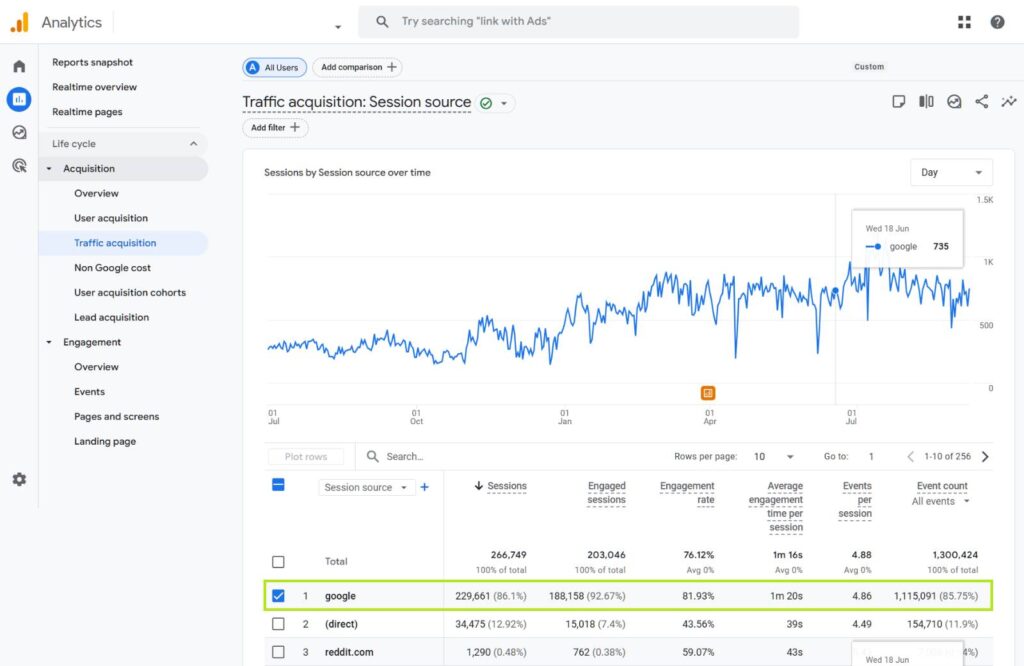
As search visibility expands, traffic from people who actually need legal help increases. Not generic traffic — but users searching terms such as personal injury lawyer, probate attorney, immigration appeal, business litigation, and similar high-intent queries. This is typically shown in Google Analytics as a consistent monthly upward trend.
Stronger rankings across competitive legal keywords
Law-related keywords are some of the most competitive online, but with ongoing backlink acquisition and improved site authority, rankings stabilize and move upward. Many firms experience a shift from page two to page one, or from lower page-one positions to the top three, where most clicks occur.
More form submissions, calls, and consultations
Ultimately, the point of better SEO is real business outcomes. As rankings improve, firms usually see increases in phone calls, contact form inquiries, live chat messages, and booked consultations. These are measurable inside GA, call tracking platforms, or CRM systems. A rising trend here is the clearest indicator that SEO work is aligned with revenue growth.
Predictable compounding growth over time
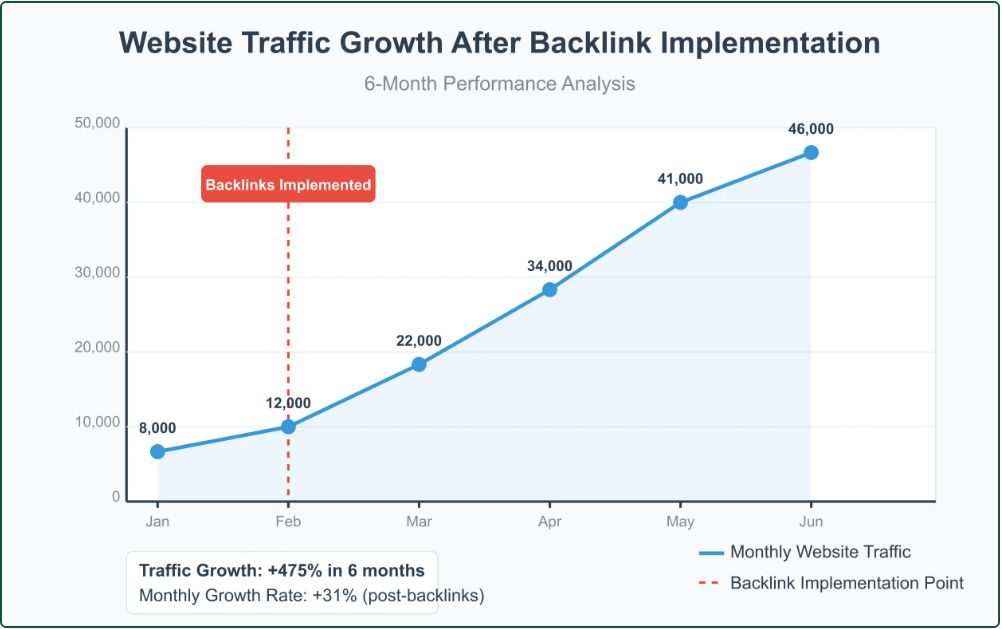
SEO results for law firms don’t happen overnight, but when backlinks, technical health, and content quality move together, the growth curve becomes predictable. Month after month, authority strengthens, rankings are maintained more easily, and the firm becomes competitive even against high-budget national brands.
Summary: The SEO Shift Every Law Firm Must Adapt To
Search has changed rapidly, and 2025 has introduced a new era where AI-driven systems, evolving user behavior, and rising competition decide which law firms get visibility. Firms that focus on strengthening authority, earning credible backlinks, maintaining a healthy website, and adapting to AI-powered search are the ones seeing the strongest growth.
SEO today is no longer just about ranking. It’s about being the firm that search engines and AI models trust to provide reliable answers when potential clients ask for legal guidance. With the right strategy, any firm can compete and stand out in this new landscape.
If you’d like to learn more about how this approach can strengthen your firm’s visibility in 2025 and beyond, click here to get an overview of our services and examples of recent results.